
If you’re thinking about buying your first food dehydrator, you might be surprised by how many different models are available. Some are small and inexpensive, while others have large drying cabinets with enough space to preserve a substantial amount of garden produce.
I’ve used both a COSORI and a NESCO food dehydrator, and one thing I’ve learned is that choosing the right size makes a big difference.
A smaller dehydrator may be perfect for occasional batches of dried fruit or herbs. But if you grow your own vegetables or want to preserve larger harvests, having more drying space can save you time.
In this guide, I’ll explain what to look for when buying a food dehydrator, compare the different styles, and share why I prefer my larger COSORI.
- Why Buy a Food Dehydrator?
- How to Choose the Best Food Dehydrator for Beginners
- Stackable vs. Shelf-Style Food Dehydrators
- My Experience Using COSORI and NESCO Food Dehydrators
- Best Food Dehydrators for Different Needs and Budgets
- What Foods Can You Dehydrate?
- Common Mistakes When Buying Your First Dehydrator
- Food Dehydrator Accessories Worth Buying
- Food Dehydrator vs. Freeze Dryer: What’s the Difference?
- Frequently Asked Questions
- Final Thoughts
Why Buy a Food Dehydrator?
A food dehydrator removes moisture from food using controlled heat and circulating air. This helps preserve fruits, vegetables, and herbs for later use.
It’s particularly useful if you have a garden and find yourself with more produce than you can eat fresh.
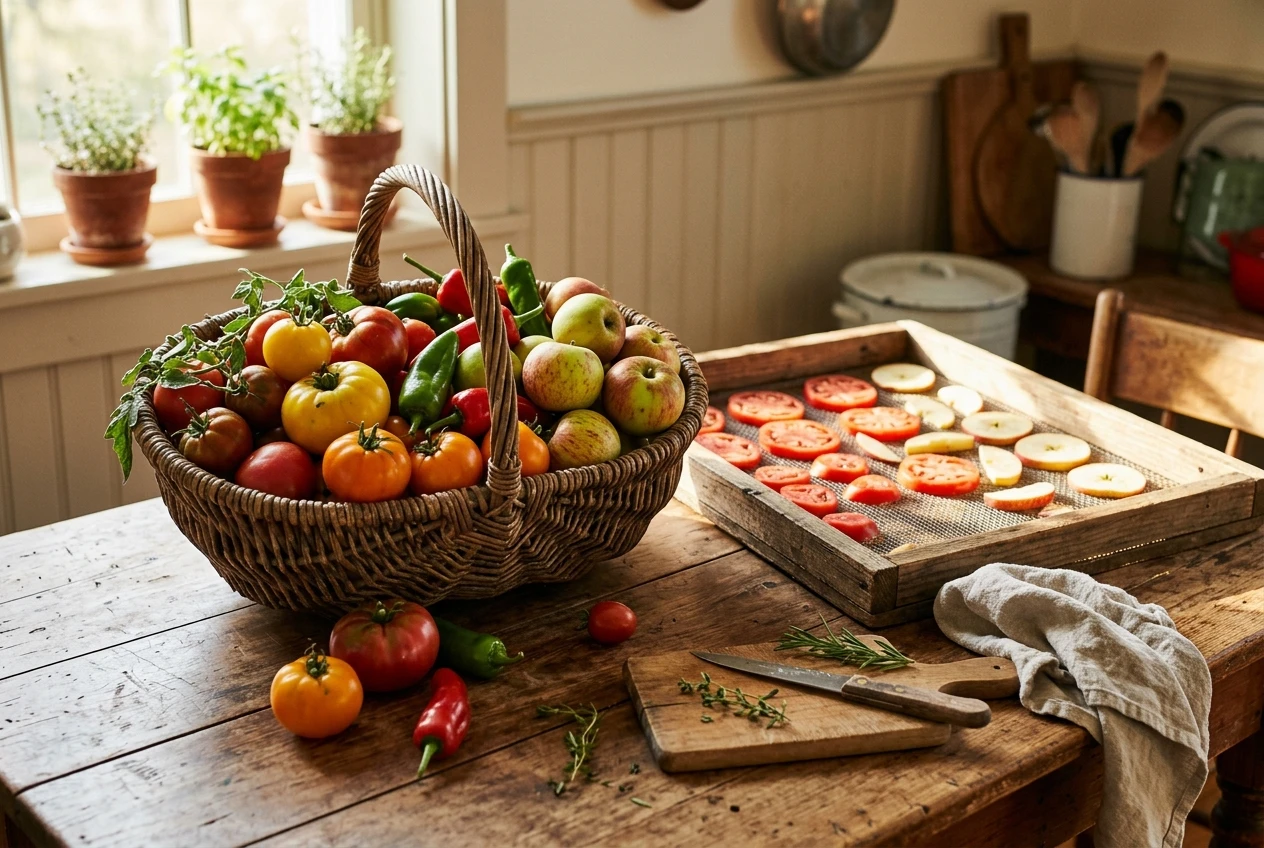
Some of my favourite reasons for using a dehydrator include:
- Preserving extra fruits and vegetables from the garden
- Drying herbs for cooking throughout the winter
- Making homemade apple chips and other snacks
- Preparing dried vegetables for soups and stews
- Reducing food waste when produce is plentiful
- Saving pantry and freezer space
Dehydrated food is also lightweight and convenient to store when properly dried and packaged.
Unlike freezing, dehydrating doesn’t require continuous electricity to keep the finished food frozen.
How to Choose the Best Food Dehydrator for Beginners
Before purchasing a dehydrator, think about how often you’ll use it and how much food you want to preserve.
A small machine may be enough if you’re occasionally drying a few apples or herbs.
However, if you’re harvesting baskets of tomatoes, peppers, or other vegetables, you’ll probably appreciate a larger machine.
Here are the most important things to consider.
Capacity and Number of Trays
Capacity is one of the biggest differences between food dehydrators.
Smaller models generally have fewer trays and take up less counter space. Larger cabinet-style machines can hold more food, making them useful during harvest season.
Remember that food needs to be arranged in a single layer with enough space for air to circulate.
If you expect to dehydrate large quantities of garden produce, I recommend considering a larger dehydrator rather than buying the smallest model available.
Adjustable Temperature Controls
Different foods require different drying temperatures.
Herbs generally need lower temperatures than fruits and vegetables. A dehydrator with adjustable temperature settings gives you more control.
Look for a machine with a thermostat and a temperature range suitable for the foods you plan to dry.
Timer and Automatic Shutoff
A built-in timer is convenient because dehydrating can take several hours.
An automatic shutoff feature is helpful, although you should still check that food has reached the proper dryness before storing it.
Easy-to-Clean Trays
Dehydrating can get messy, particularly when working with juicy fruit.
Removable trays that are easy to wash make cleanup much simpler.
Before purchasing, check whether replacement trays and accessories are available for the model you’re considering.
Stackable vs. Shelf-Style Food Dehydrators
There are two common dehydrator designs, and each has advantages.
Stackable Food Dehydrators
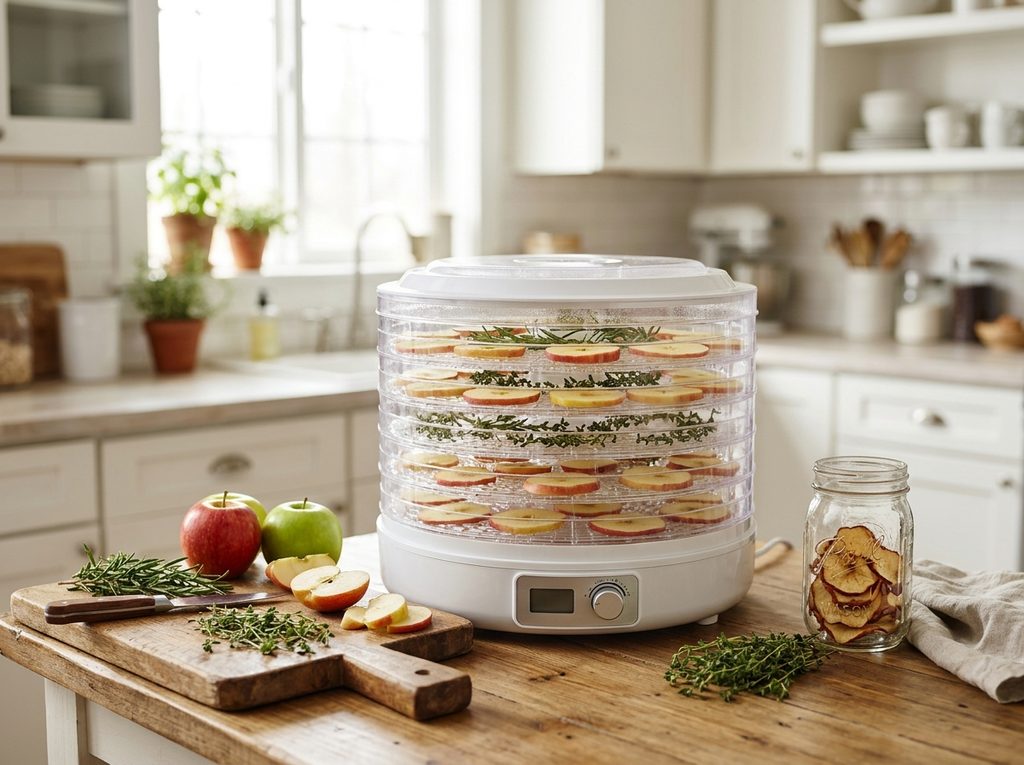
Stackable dehydrators generally use round or rectangular trays that fit on top of one another.
Many NESCO models use this design.
Advantages:
- Often more affordable
- Compact and easy to store
- Good for smaller batches
- Some models allow additional trays
Disadvantages:
- Trays may need rotating for even drying, depending on the model
- Checking lower trays can be less convenient
- Capacity may be limited
A stackable dehydrator can be an excellent choice for someone just starting.
Cabinet-Style Food Dehydrators
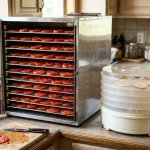
Cabinet-style dehydrators have individual trays that slide in and out, much like oven racks.
My COSORI uses this design.
Advantages:
- Convenient pull-out trays
- Often available with larger drying capacity
- Easy to check individual trays
- Many models use rear-mounted fans for airflow
Disadvantages:
- Larger models require more counter and storage space
- Usually cost more than basic stackable models
If you regularly preserve food from a large garden, this style is worth considering.
My Experience Using COSORI and NESCO Food Dehydrators
I’ve used both COSORI and NESCO food dehydrators, and while both have been useful, I personally prefer my COSORI.
The main reason is its larger capacity.
My COSORI has rectangular pull-out trays, giving me more room to spread out the food I’m dehydrating. I can dry larger quantities at once, which is particularly helpful when preserving garden produce.
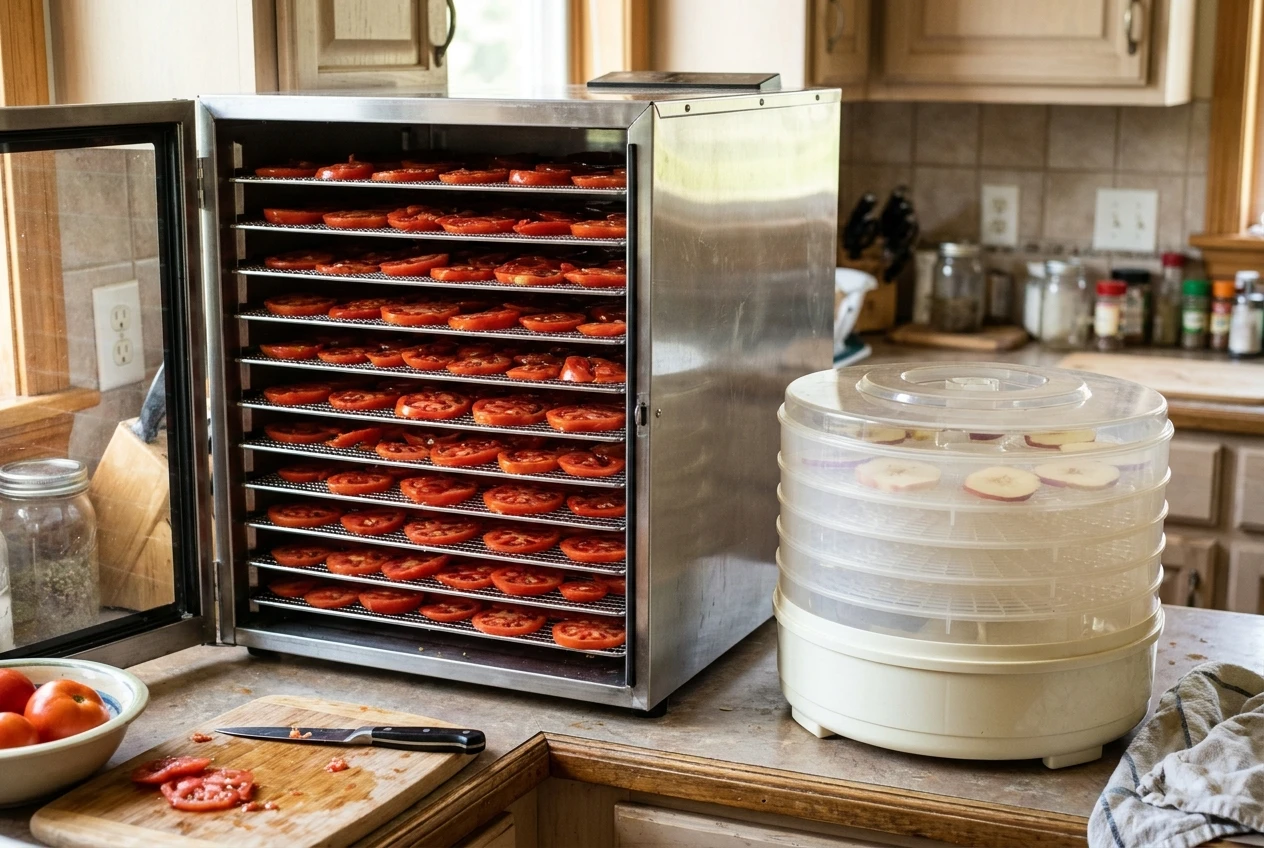
My NESCO is another option, but I find myself preferring the extra space in the COSORI.
That’s something I would encourage beginners to think about before purchasing a dehydrator.
You might only plan to dry a few apples or herbs at first, but once you discover how useful dehydrating can be, you may wish you had more room.
If you’re comparing dehydrators, take a look at the COSORI cabinet-style food dehydrators and NESCO food dehydrators on Amazon. Pay particular attention to tray capacity and dimensions rather than choosing by price alone.
Best Food Dehydrators for Different Needs and Budgets
There isn’t one dehydrator that’s perfect for everyone.
The best choice depends on how much food you plan to preserve, your available kitchen space, and your budget.
Best for Occasional Use: A Compact Stackable Dehydrator
If you’re mainly interested in drying herbs, apple slices, or small batches of vegetables, a compact stackable dehydrator may be all you need.
NESCO offers several models worth comparing.
If you’re looking for an affordable dehydrator for smaller batches, take a look at the NESCO food dehydrators on Amazon. They’re worth considering for beginners who want to dry fruit, vegetables, and herbs without investing in a larger machine.
Best for Garden Harvests: A Larger COSORI Dehydrator
If you regularly preserve larger quantities of fruits and vegetables, I’d lean toward a cabinet-style dehydrator.
The larger capacity of my COSORI is the reason I prefer using it.
If you’re planning to preserve larger garden harvests, take a look at the COSORI stainless steel food dehydrators on Amazon. The pull-out trays make it easy to arrange food, and the larger models provide plenty of drying space for bigger batches.
Best Budget Choice: A Basic Model With Temperature Control
You don’t necessarily need a digital display or an expensive stainless steel cabinet to get started.
A simple dehydrator with reliable airflow, adjustable temperature controls, and removable trays can be a practical first purchase.
I’d prioritize these features over decorative extras.
What Foods Can You Dehydrate?
One of the best things about owning a food dehydrator is the variety of foods you can preserve.
Fruits
Apples, bananas, strawberries, peaches, and pears are popular choices.
Dried fruit makes a convenient snack and can also be added to oatmeal, baking, and homemade trail mixes.
If you’re ready to try your first batch, my Dehydrating Apples for Healthy Snacks guide walks you through preparing, drying, and storing homemade apple snacks.
Vegetables
Tomatoes, peppers, carrots, zucchini, and many other vegetables can be dehydrated using appropriate preparation methods.
Some vegetables need blanching before drying to help maintain quality.
Dried vegetables are useful for soups, stews, and other cooked dishes.
If you’re planning to preserve vegetables from your garden, explore my other food dehydrating guides for tips on preparing and drying different types of produce.
Herbs
Parsley, basil, oregano, thyme, and other garden herbs are excellent candidates for dehydrating.
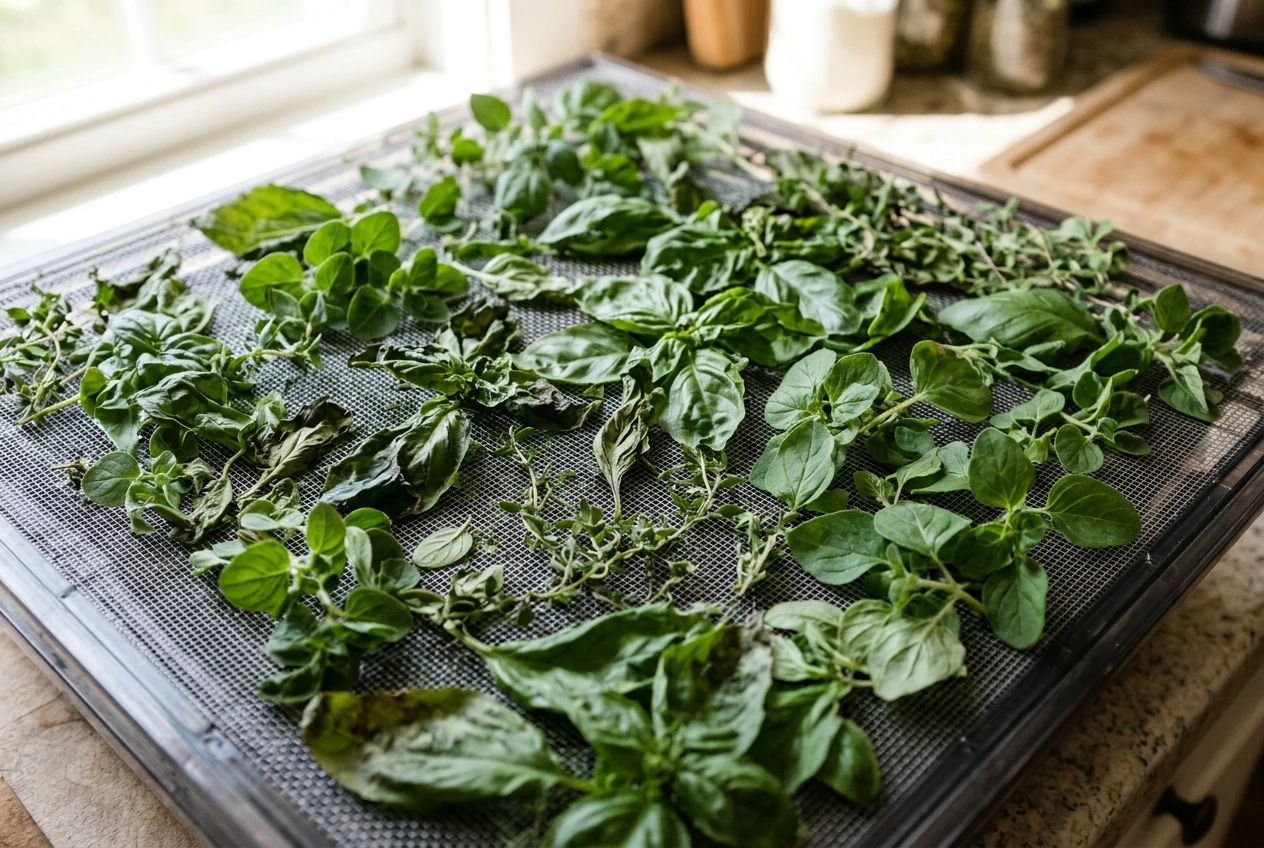
Herbs usually require lower temperatures than fruits and vegetables to help preserve their quality.
Meat and Jerky
Some dehydrators can also be used for making jerky.
However, meat requires additional food safety precautions. USDA guidance recommends heating meat to 160°F (71°C) and poultry to 165°F (74°C) before dehydrating. Always follow a tested jerky procedure rather than relying on the dehydrator temperature alone.
For detailed drying instructions, visit the National Center for Home Food Preservation.
Common Mistakes When Buying Your First Dehydrator
There are a few mistakes worth avoiding.
Buying a machine that’s too small: Think about how much produce you’ll want to preserve during your busiest harvest weeks.
Choosing a model without temperature control: Adjustable temperatures make the machine more versatile.
Ignoring tray dimensions: The number of trays doesn’t tell you everything. Larger trays may provide considerably more drying space.
Forgetting about storage space: A large cabinet dehydrator is useful, but make sure you have somewhere to keep it.
Buying accessories before you need them: Start with the trays supplied with the machine and add extras later.
Food Dehydrator Accessories Worth Buying
You don’t need many accessories to get started, but a few can make dehydrating easier.
Silicone or Fruit Leather Sheets
If you enjoy making homemade fruit leather, reusable silicone dehydrator sheets are worth having. You can find fruit leather sheets on Amazon, but be sure to choose ones that fit your dehydrator’s trays.
Fine Mesh Tray Liners
Fine mesh dehydrator liners are especially useful when drying small herbs, berries, and finely chopped vegetables. You can find reusable dehydrator mesh liners on Amazon, but make sure they’re the correct size for your dehydrator trays.
Mandoline Slicer
A mandoline slicer makes preparing fruits and vegetables for dehydrating much easier. It cuts apples, zucchini, potatoes, and other produce into uniform slices, helping everything dry more evenly. You can find adjustable mandoline slicers on Amazon, but choose one with a safety guard to protect your fingers.
Airtight Storage Containers
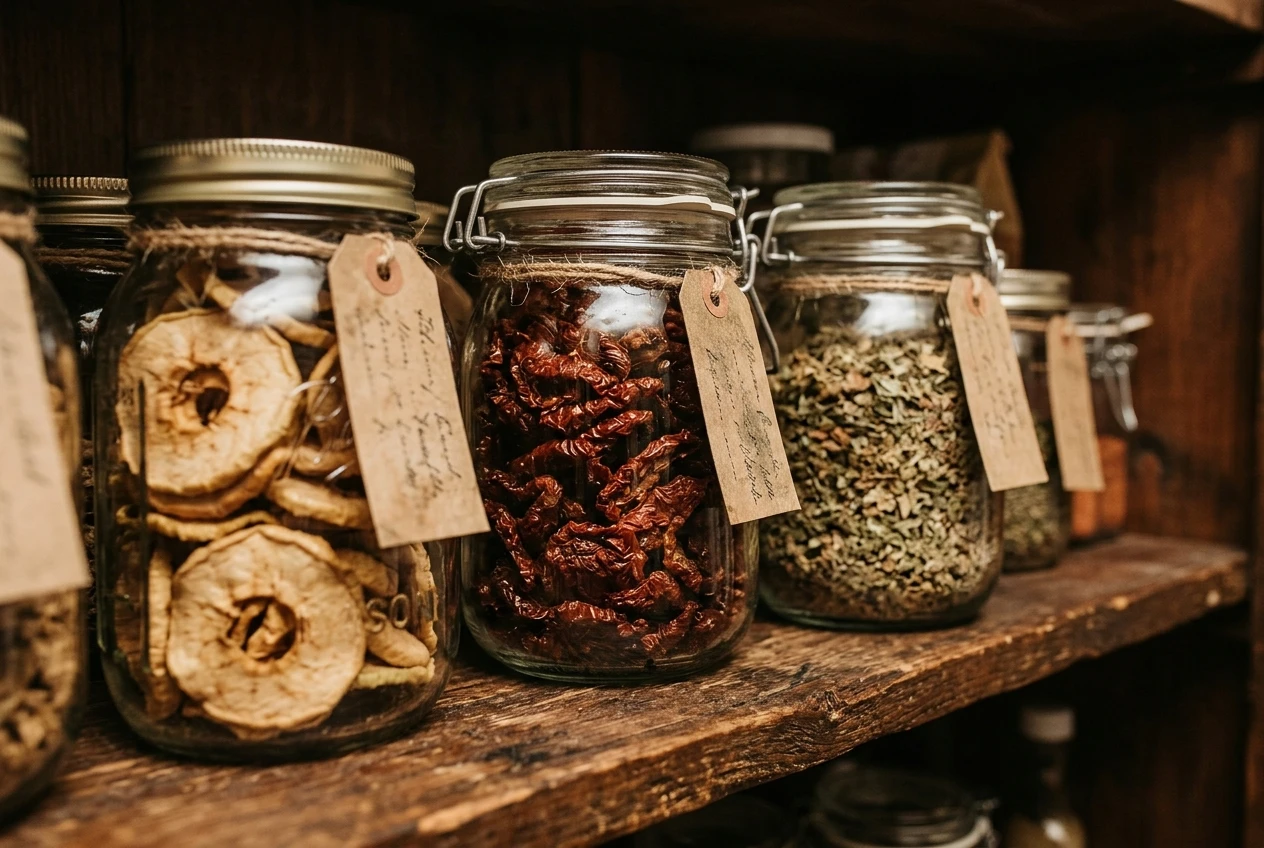
Proper storage is just as important as dehydrating your food. Once your fruits, vegetables, and herbs are completely dried, cooled, and conditioned where appropriate, store them in airtight containers to help protect them from moisture. I like glass Mason jars because they’re reusable and make it easy to see what’s inside. You can find a variety of airtight glass food storage jars on Amazon, including different sizes for storing your dried garden harvest.
Food Dehydrator vs. Freeze Dryer: What’s the Difference?
Although dehydrators and freeze dryers both remove moisture from food, they work differently.
A food dehydrator uses warm air to gradually dry food.
A freeze dryer freezes food and then removes moisture under vacuum through sublimation.
Freeze drying generally removes more moisture and can preserve a different texture, but freeze dryers are considerably more expensive.
If you’re considering both options, read my Harvest Right Freeze Dryer Review: Is It Worth the Investment?.
For most beginners who want to preserve garden herbs, fruits, and vegetables without making a major investment, a food dehydrator is a practical starting point.
Frequently Asked Questions
Is a food dehydrator worth buying?
If you regularly have extra garden produce or enjoy homemade dried snacks, a dehydrator can be a worthwhile investment. It helps you preserve food that might otherwise go to waste.
Is a COSORI or NESCO dehydrator better?
Both brands offer different models for different needs. I own both and prefer my larger COSORI because I can dehydrate more food at once. However, a smaller NESCO may be sufficient for someone drying occasional batches.
How many trays should a beginner dehydrator have?
That depends on how much food you plan to dry. Rather than focusing only on tray count, compare the total drying area and how much room each tray provides.
Can you leave a food dehydrator running overnight?
Some manufacturers design their dehydrators for extended drying cycles. Follow your model’s operating and safety instructions, keep ventilation openings clear, and use the appliance only as directed.
How long does dehydrated food last?
Shelf life depends on the type of food, how thoroughly it was dried, packaging, and storage conditions. Store properly dried food in airtight containers in a cool, dry, dark location, and check for signs of moisture or spoilage.
Final Thoughts
Choosing your first food dehydrator doesn’t have to be complicated.
Think about what you want to preserve, how much food you’ll be drying, and how much space you have available.
Having used both COSORI and NESCO dehydrators, I prefer my larger COSORI because it gives me more room to work with.
But if you’re just starting and only plan to dry small batches, a compact dehydrator may be all you need.
Whichever style you choose, a good food dehydrator can become one of the most useful tools in your food preservation kitchen.
© 2026, admin. All rights reserved.